



Unclog a Bathroom Sink: Bathroom sinks can become clogged for various reasons, such as hair, soap scum, and toothpaste buildup. However, unclogging a sink is a relatively easy task that can be done with a few household items. The most straightforward plumbing problem is a clogged bathroom sink! You only need a little knowledge, the right tools, and the willingness to get your hands dirty to get started.
Clogged bathroom sinks can be easy to unclog (and you should never spend all day doing it). With advanced tools such as snaking your drain to simple chemical solutions (like vinegar and baking soda), you’ll learn more about sinks and how to unclog them. Here are some steps to help you unclog your bathroom sink.
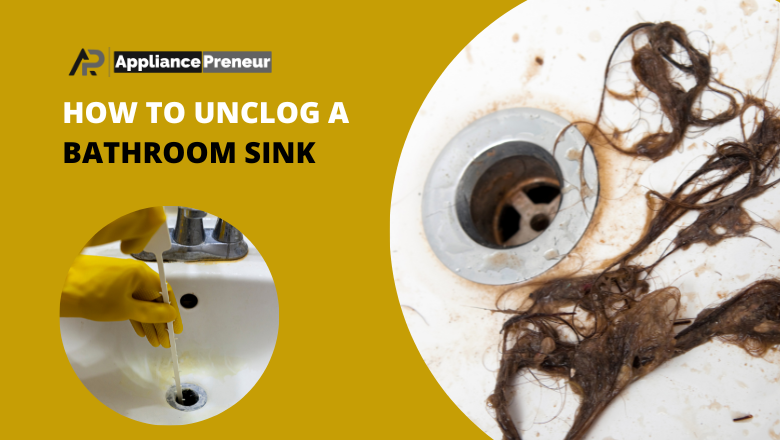
- Causes of sink clogs:
- Hairs:
Hair shedding over your bathroom sink drain is a common risk associated with washing your face, shaving, and other grooming activities!
- Toiletries & other debris:
Things like cotton swabs, dental floss, paper towels (which should never be allowed to accumulate in your drain in the first place! ), etc., contribute to sinking draining slower because they add bulk to the pipes, which will also cause them to drain slower.
- Soap & soap scum:
Your soap may be the cause of your clogged bathroom sink. With hard water, soap scum is especially prevalent. Mold and mildew can grow in your pipes as it builds up over time. Suds produced by liquid bath soaps go down the drain and build up in pipes, causing blockages within a short period.
- Damaged pipes:
When the bathroom sink drains slowly or not at all, it could be due to a damaged pipe or pipes. Slow drains and clogs can result from rust, corrosion, and other common pipe damage. Getting in touch with a professional plumber may help determine whether this is the case.
- The p-trap is jammed:
Under your bathroom sink, you have a curved pipe that connects your sink drain to the wall pipe. In other words, it prevents the entrance of harmful sewer gasses into your bathroom through the drain.
- Unclogging a drain with household tools
- Drain a sink using a toilet plunger:
You might not know plungers are not just for toilets. Clogged bathroom sink drains can be removed with a plunger! To achieve this, place the rubber part of the plunger over the opening of your drain to see if it works. Using both hands, you need to push down firmly on the obstruction, then pull it back up again to remove it from the system. Keep pushing too hard, and give it some time before repeating – and if the pipes are old, be careful to keep them intact!
- Remove hair clumps with the Zip-It tool:
Hair clumps are the leading cause of bathroom sink drain clogs. A “Zip-It” drain-clearing tool should solve this issue before even getting into the next several steps!
“Zip-It” drain cleaning tools are flexible, flat strips of plastic with teeth – place them as deep into your bathroom sink drain as you can (don’t worry if you can’t get past the clog at first); rock them back and forth to loosen up any hair or debris that may be building up in them, then pull them out. This needs to be repeated several times. Hair may be pulled up from the drain each time. Pull the tool out of the drain until you can no longer see any hair on it after sticking the tool into the drain.
- Wet and Dry Vacuum:
Especially stubborn clogs can be easily removed with a wet and dry shop vacuum. Creating a seal for the hose will reduce the amount of time it takes to remove the obstruction (like the lid of a plastic soda bottle or the plunger head). Use the shop vacuum at its highest liquid setting for the rest. Usually, the powerful suction is strong enough to remove what’s clogging the pipes. Liquids can be vacuumed safely when the wet setting is selected and the suction button is pressed. The clog will be visible when you hold the vacuum over it.
- Make use of a drain snake:
As the name implies, a drain snake is a long metallic spiral tool you thread down your drain to remove clogged debris. This snake is shaped like a corkscrew on one side, and on the other side, it has a hand crank that aids in drilling it through obstructions on the other side. This could be a great choice if you have yet to succeed with any previous methods.
Since your P-trap has still been removed, insert your drain snake carefully into the pipe in the wall where your P-trap was. You can turn the crank to drill forward and unclog any debris.
- Using Household Cleaners to Unclog a Drain
- Pour boiling water in the sink:
Pour boiling water down the sink drain. You should be able to melt through anything in your drain and clear out any obstructions. It only takes a few minutes to boil a pot of water. Once the liquid has boiled, carefully pour it into the sink drain without touching it with your hands! Use a turkey baster instead if your sink doesn’t have handles or sidewalls so you can get close enough. Generally, this will unclog most drains immediately if you pour in hot water first and then try again after a few minutes.
- Baking Soda and Vinegar:
The method of using baking soda to unclog drains is an old one, which has proven to be very helpful in the case of clogged sinks in bathrooms. A measuring cup filled with 1/3 cup baking soda and 1/3 cup vinegar is all needed.
This mixture will immediately start fizzing and should be poured down the drain as soon as possible. This action is responsible for effectively removing hair and grime. It is best to let it soak for about an hour before flushing it out with hot water after that.
- Baking Soda and Salt:
Baking soda and salt are also effective combinations. The mixture should consist of 1/2 cup of each ingredient and be poured down the drain. It is recommended to wait about fifteen minutes before boiling water to flush the drain. The chemical reactions created by all three components can unblock some of the toughest bathroom sink blockages.
- Pour liquid dish detergent:
You will need to add 1 1/4 cups (59 mL) of dish detergent to your sink. Due to its density and weight, it should sink to the bottom. Leaving it to sit for up to 30 minutes is the best thing you can do. After that, you must fill a container with hot water and gently pour it into the sink.
- Make sure the sink does not overflow.
- When you’re finished, plunge the toilet until it’s clear
Conclusion:
Hopefully, you now know how to clear a bathroom sink drain. Unclogging a bathroom sink is a relatively simple process that can be done with a plunger, baking soda, vinegar, and pliers. If none of these methods work, it’s best to call a professional plumber for help. Some sink clogs are difficult to remove or so far down the line that they require extra finesse and professional tools to clear. You can rely on a plumber to dislodge these tough clogs and help your drain flow again. With the right tools and a little know-how, you can have your bathroom sink flowing properly again.
